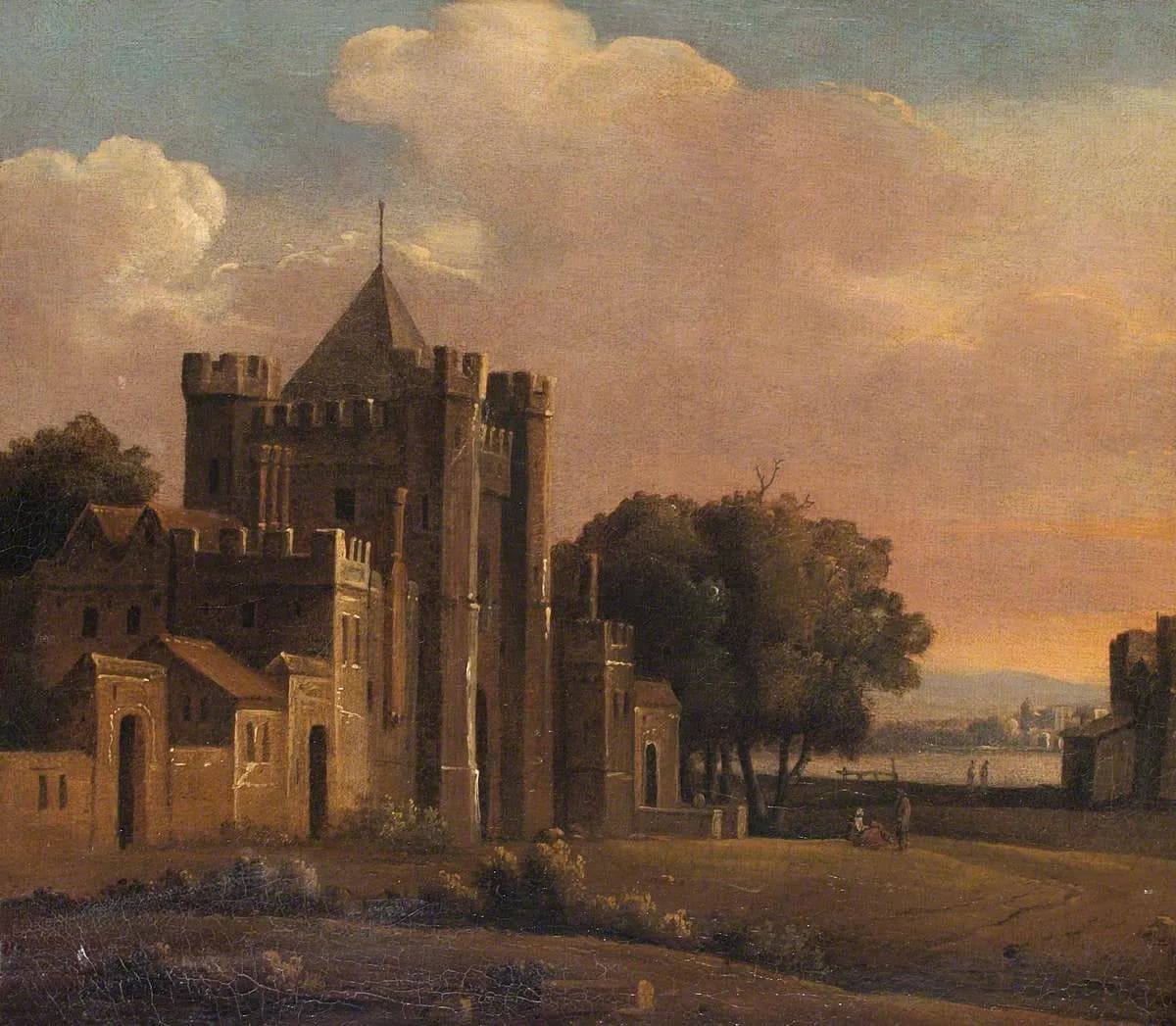
For more than five centuries, Croydon Palace stood as one of England's most significant ecclesiastical residences. The complex served as the summer home of the Archbishops of Canterbury from the late 13th century until 1780, hosting royalty, shaping religious policy, and leaving an architectural legacy that survives to this day.
Origins of an Archiepiscopal Seat
The connection between Croydon and the archbishops stretches back to the late Saxon period, with records of buildings on the site predating 960. The Domesday Book of 1086 records Archbishop Lanfranc holding the manor of 'Croindene', valued at 27 pounds, complete with church, mill, meadow and woodland sufficient for 200 pigs.
The first recorded archiepiscopal residence dates to 1273, when Archbishop Kilwardby secured permission from Edward I to hold a market in Croydon that same year. The palace functioned as a staging post on the journey between Canterbury and Lambeth, positioned a day's travel from London. Its location made it both convenient and, as later archbishops would discover, somewhat problematic.
Medieval Expansion and Royal Visits
The 15th and 16th centuries saw the palace take on much of its current form. Archbishop Thomas Arundel (1396-1414) built the Guard Chamber, now the palace library, with his arms carved into the roof corbels. Archbishop John Stafford (d. 1452) constructed the Great Hall between 1443 and 1452, a space measuring 56 feet by 38 feet with a timber roof featuring carved corbels displaying the arms of successive archbishops.
Archbishop Thomas Bourchier (1454-86) built the present chapel and rebuilt upper walls in brick, while his successor John Morton (1486-1500) extended the chapel westward and added a dining room and wing linking the house and chapel. Morton's rebus, a tun (barrel), appears in the chapel screen to this day.
The palace's royal connections were considerable. James I of Scotland dated a deed at Croydon in 1412 while in the custody of Archbishop Arundel. Queen Elizabeth I visited on multiple occasions; in 1573 she stayed for a full week with all her attendants. Sir Christopher Hatton received the Great Seal of England from the Queen in the Long Gallery in 1587.
The Tudor and Stuart Archbishops
Archbishop Thomas Cranmer (1533-1555) maintained his library at Croydon and conducted significant business there. In 1533 he interviewed John Frith on charges of heresy. Cranmer was summoned from Croydon to attend Henry VIII's deathbed in January 1547. The archbishop was also present during a freak earthquake and outbreak of sweating sickness that struck Croydon in 1551.
Archbishop Matthew Parker (1559-1575) entertained Elizabeth I at the palace on at least three occasions. Edmund Grindal (1576-1583) retired to Croydon for his health, dying there on 6 July 1583; he is buried in Croydon Minster. When Elizabeth visited, Grindal told her that although the house was not healthy, its nearness to London made it convenient for him.
It was Archbishop John Whitgift (1583-1604) who first called Croydon a "palace". He was fond of "the sweetness of the place" and entertained Elizabeth I there on multiple occasions. Whitgift founded Whitgift School and the Whitgift Hospital in 1596, charitable foundations that continue to operate in Croydon today.
Archbishop William Laud (1633-1645) restored the chapel, added altar rails, desks, and a raised pew, and installed an organ. Evidence from Croydon was later used at his trial for treason. An ordination service at the palace was famously interrupted in 1633 by a messenger bringing news of the Duke of Buckingham's death.
Decline and Sale
The Commonwealth period saw the palace pass into private hands, owned by Colonel Sir William Brereton. The chapel was allegedly converted into a kitchen during this time. After the Restoration, Archbishop William Juxon (1660-1663) restored the chapel roof and added pews. Gilbert Sheldon (1663-1677) spent his latter years at Croydon and died there in 1677.
Later archbishops found the palace increasingly unsuitable. Sir Francis Bacon described it as "an obscure and darke place" surrounded by dense woodland. Henry VIII found it "rheumatick... a place where he could not stay without sickness". The 1780 Croydon Palace Act noted the building was "in so low and unwholesome a situation and in many respects so incommodious and unfit for an archbishop's house".
On 10 October 1780, Abraham Pitches purchased the palace at auction for £2,520. The building passed through various industrial uses, including calico printing and bleaching, and served as a school for Anglo-Indian children.
Preservation and Educational Legacy
In 1887, the 7th Duke of Newcastle purchased the palace and gifted it to the Sisters of the Church. The Old Palace School was founded in 1889, occupying the historic building until its closure in 2025. The palace has been Grade I listed since 1951, recognising its exceptional architectural and historical significance.
What Remains Today
Visitors to the Old Palace today can still see the Great Hall with its 15th-century timber roof and carved corbels bearing the arms of Stafford, Herring, Juxon and Laud. The chapel, extended by Morton and restored by Laud, features 17th-century stalls and an elaborate screen displaying Morton's rebus. The Guard Room, or Great Parlour, ascribed to Archbishop Arundel, contains a bay window and 17th-century windows. The Long Gallery was rebuilt by Archbishop Wake (1716-1737) and contains what is known as "Queen Elizabeth's room" and a "minstrels' gallery".
The building stands as an aggregate of different periods and styles; earlier parts constructed in stone and flint rubble, with later work in red brick. The late 14th-century vaulted porch at the northeast of the Great Hall survives, though the oriel window formerly at the dais end has been destroyed, and the servants' quarters were demolished in the 19th century.
Local Legacy
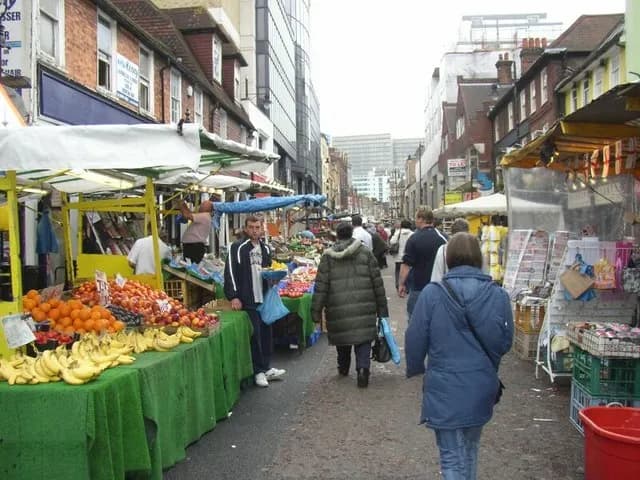
Six archbishops are buried in Croydon Minster, and the town retains numerous reminders of its episcopal past. Street names such as Whitgift Street and Grindall Close commemorate the archbishops who shaped both the building and the town. The Whitgift Foundation continues to operate schools and almshouses in Croydon, a living legacy of the archiepiscopal presence that endured for more than 500 years.